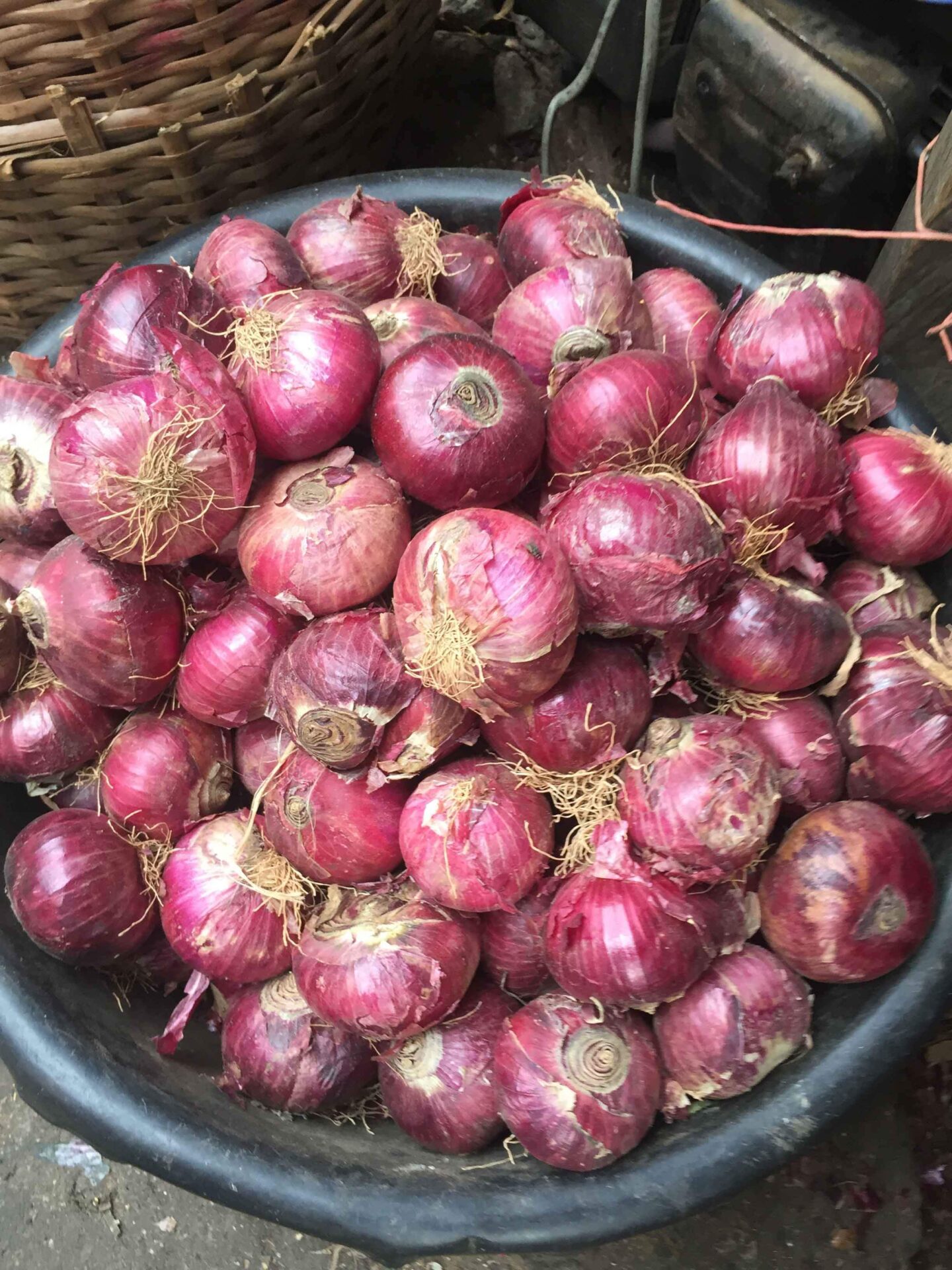

Nigeria N945 billion onion business don dey face fresh challenge after Ghana suspend onion imports from Nigeria indefinitely.
The suspension come after disagreement between Nigerian and Ghanaian traders for Kotoku Market, Ghana.
The National Onion Producers, Processors and Marketers Association of Nigeria (NOPPMAN) say restrictions wey market operators put on Nigerian and Nigerien onion trucks don make many trucks stay for days without offloading their goods.
Because onions dey spoil quickly, the delay don cause serious financial losses for Nigerian exporters and truck drivers.
NOPPMAN president, Aliyu Maitasamu, say the situation dey cause “significant financial losses” for Nigerian onion exporters and transporters, while the onions dey deteriorate.
He say the restrictions against Nigerian onions violate regional trade agreements under the ECOWAS Trade Liberalisation Scheme and the African Continental Free Trade Area (AfCFTA).
Maitasamu call on ECOWAS to intervene and help resolve the dispute.
He say no market association or group of traders should get the power to stop legitimate goods from another ECOWAS member country from entering the market.
The dispute involve about N14.5 million in annual cross-border onion trade between Nigeria and Ghana, according to industry figures cited in the report.
International trade expert, Obiora Madu, say the problem goes beyond onions.
“The onion dispute is not really about onions. It is about the credibility of regional trade integration,” he said.
Madu say although West African countries get trade agreements on paper, the real challenge na how to make those agreements work.
He warn say sudden disruption of market access can make traders lose confidence in doing business across West Africa.
Eric Alao, entrepreneur and lecturer at Lead University, also say ECOWAS has not been able to permanently resolve similar disagreements between Nigerian and Ghanaian traders.
He say AfCFTA, wey suppose help remove barriers to trade across Africa, still get serious implementation challenges.
Alao also point to the stronger Ghanaian cedi against the naira as one factor behind the disagreement between traders from both countries.
Data from the Nigerian Foreign Exchange Market shows say one Ghanaian cedi exchanged for N115.85.
Nigeria produces about 1.7 million metric tonnes of onions every year, according to 2024 Food and Agriculture Organisation data.
The country ranks fourth in Africa and 14th globally in onion production.
Nigerian onions dey supply countries including Ghana, Niger, Benin, Côte d’Ivoire, Chad, Cameroon and Senegal, with Ghana accounting for a large part of the regional trade.
Maitasamu acknowledges efforts by the Nigerian and Ghanaian governments to resolve the problem, but say Nigerian onion trucks still face restrictions at Kotoku Market.
He say the association’s concern no be against Ghana or Ghanaian people, pointing to the long economic and diplomatic relationship between both countries.
NOPPMAN dey ask ECOWAS to act as neutral mediator and bring together both governments, trade authorities and onion associations.
The association also proposes a formal agreement for cross-border onion trade.
The agreement, according to Maitasamu, should clearly define rules for market access, movement of trucks, offloading of goods, allocation of consignments and how traders go resolve disputes.
“We are seeking a permanent and fair system,” he said.
Read also: OSUN GUBER: SOLDIERS TAKE OVER INEC OFFICE AS ELECTION SECURITY TIGHTENS
Challenges For Onion Farmers
Apart from the Ghana dispute, Nigeria’s onion industry dey face other challenges.
These include high post-harvest losses, limited access to improved seeds, poor access to credit, and lack of agricultural subsidies for onion farmers.
Maitasamu say poor storage facilities dey force many farmers to depend on traditional storage methods.
According to am, this fit lead to loss of more than half of the onions farmers harvest.
The industry association say if the dispute with Ghana no resolve quickly, Nigerian farmers and traders fit continue to lose money, while consumers in Ghana may face higher onion prices.